In search of roots: contemporary Mexica between tradition and modernity.
Among Mexico's approximately 150 million inhabitants, there are over 50 ethnic groups, including Mestizos and Indians from the Mayan, Aztec, Zapotec, Otomí, and Mixtec groups. It is estimated that up to 4 million people live according to ancient traditions and speak their native dialects, thus attempting to recreate the remnants of the culture that existed before Columbus discovered America. For the indigenous inhabitants of both parts of the continent, 1492 was not the beginning of civilization, but a regression, the enslavement of the population, and mass extermination not only in battles, but also as a result of diseases brought by Europeans.
Contemporary Mesoamericans try to find their own identity in the heritage of pre-Hispanic Indians, or rather in vague memories of them. They give themselves old Indian names. They are trying to revive the almost forgotten Nahuatl language, which is spoken today by as many as 1.5 million people, making it the second most popular language after Spanish.
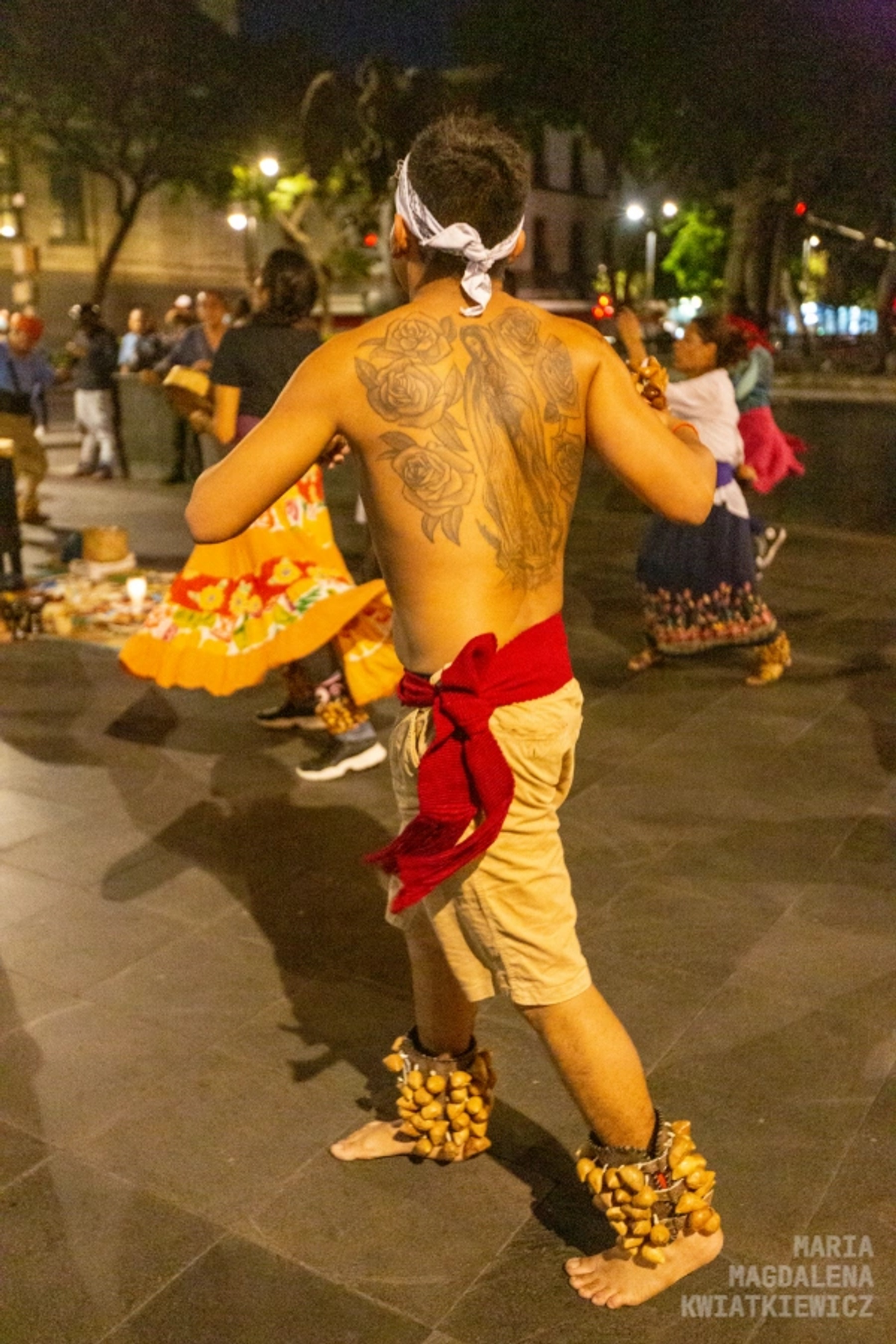
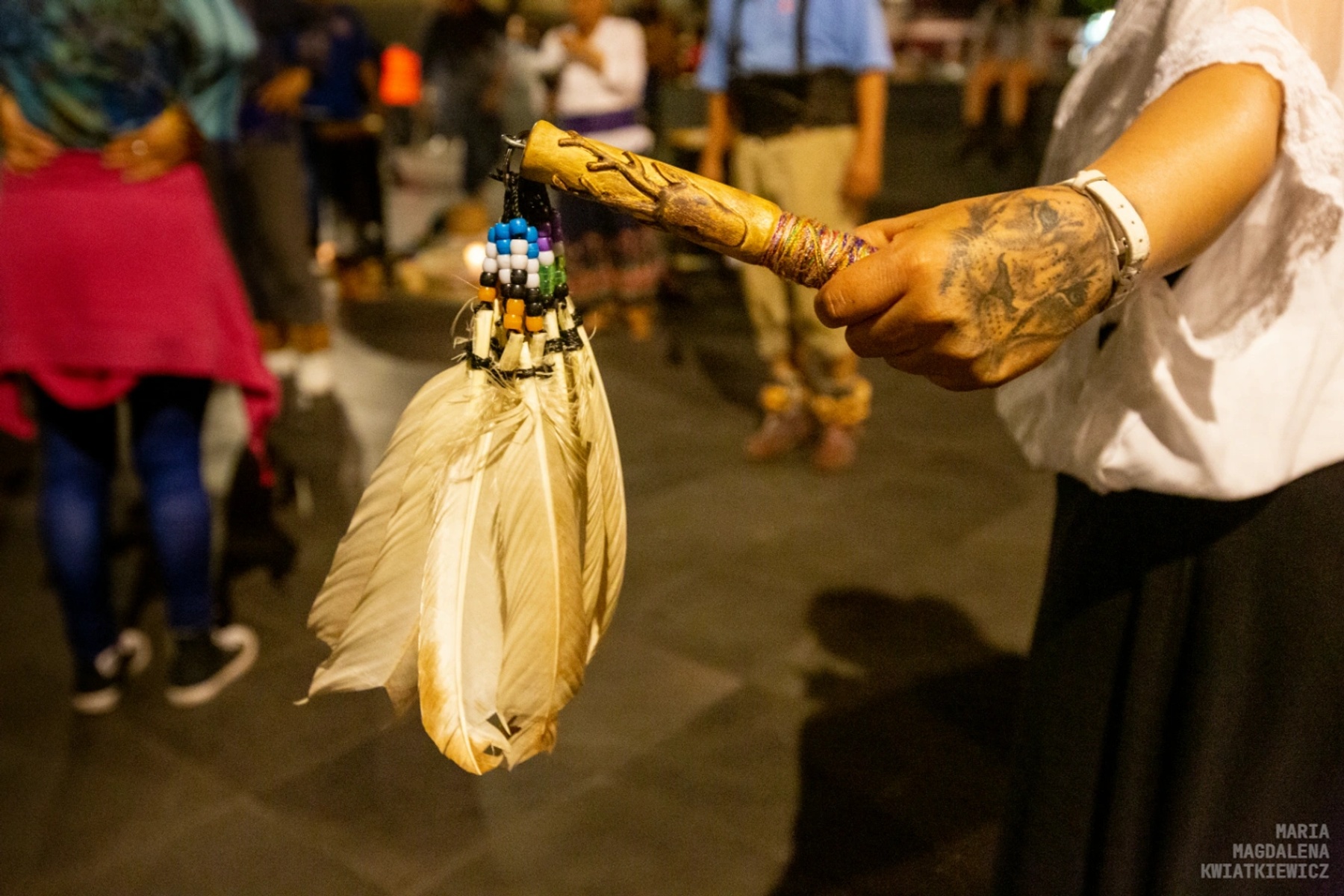
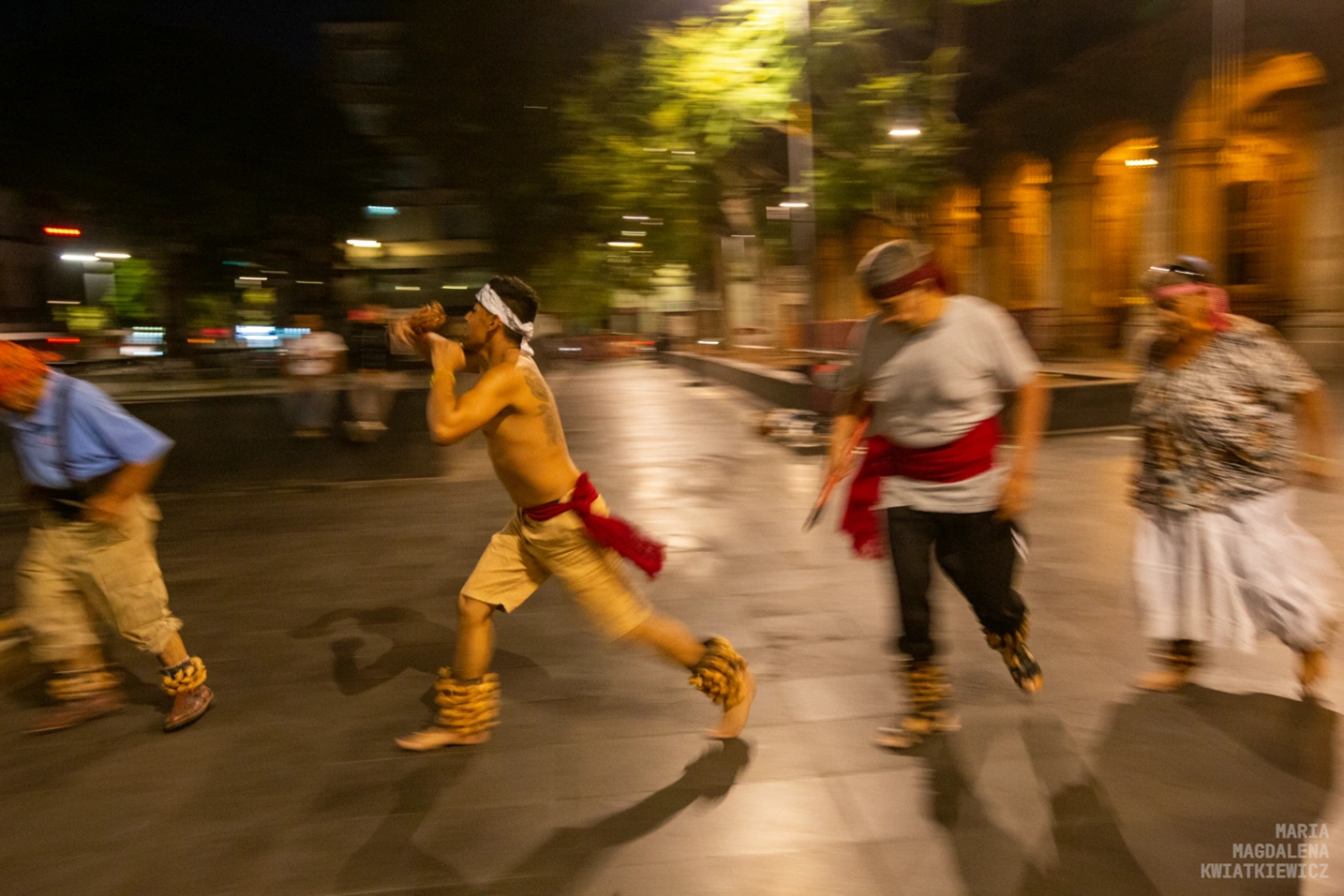
In the photo, I captured the descendants of the Aztecs, who call themselves Mexicans. On days that are important to them, they gather in the main square of Zocalo in Mexico City, right next to the monument to their ancestors. And although they have the Virgin of Guadalupe tattooed on their backs, they dance in a tribal way, and they do so on the ruins of Tenochtitlan – the former capital of the Mesoamerican empire, which was located right here. They believe that when they dance, they are filled with divine energy, which miraculously gives life to everything. Apparently, every ruler who ascended the throne first danced, trying not to make any mistakes in the dance. For every mistake threatened chaos and disruption of the world order.